


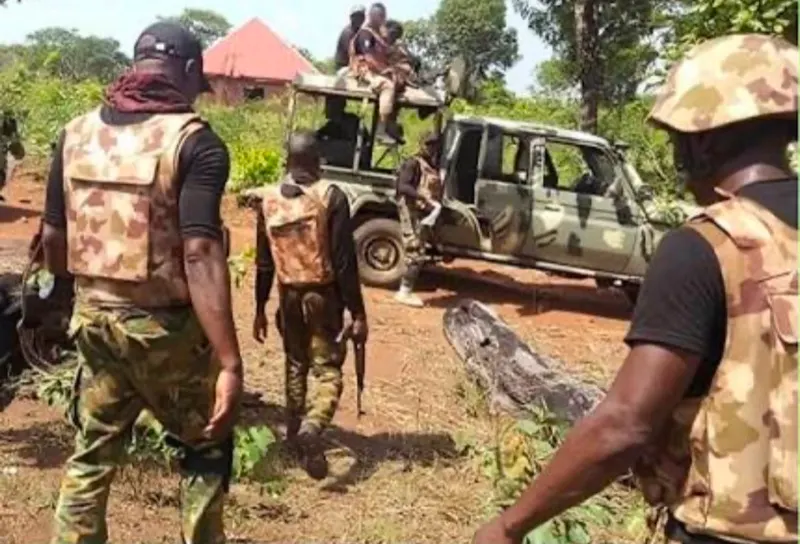
ABUJA — Nigerian security agencies have rescued 308 people abducted in separate attacks in Kwara and Niger states, in what the Presidency described as the country's largest single-day rescue operation. President Bola Tinubu welcomed the development on August 5, 2026, and directed security agencies to strengthen early-warning systems to prevent future mass abductions. According to a statement issued by the President's Special Adviser on Information and Strategy, Bayo Onanuga, 163 of the rescued victims were abducted from Woro community in Kaiama Local Government Area of Kwara State, while another 145 people were kidnapped in a separate attack in Niger State. The victims were rescued from the Kainji Lake National Park forest in New Bussa Local Government Area of Niger State during a coordinated intelligence-led operation. The operation involved the National Counter-Terrorism Centre, the Armed Forces, the Department of State Services and the Nigeria Police Force. The rescue represents a significant development for families and communities affected by the attacks, particularly in areas where insecurity and mass abductions have created prolonged fear. Woro and neighbouring communities in Kwara have faced serious security concerns, with residents previously calling for stronger government action following attacks and abductions. The use of the Kainji Lake National Park forest as the location where victims were recovered also highlights the continuing challenge security agencies face in areas where large forested territories can provide hiding places for criminal and armed groups. President Tinubu commended the security agencies involved in the operation and directed them to improve intelligence gathering and early-warning mechanisms. Such systems are intended to help authorities detect threats earlier and respond before attacks develop into large-scale abductions. The rescue also underscores the importance of cooperation among the military, police, intelligence agencies and other security institutions. Coordinated operations can allow agencies to combine intelligence, surveillance and operational resources when dealing with kidnappers and armed groups operating across state boundaries. For the rescued victims, attention will now turn to medical assessment, psychological support and reunification with their families. People held in captivity for extended periods can require medical and social assistance after release, particularly where they have experienced violence, deprivation or difficult living conditions. The operation also comes amid continuing efforts by the Federal Government and state authorities to address insecurity in parts of northern Nigeria. Kidnapping and terrorism have remained major concerns in several communities, with authorities under pressure to protect rural populations, travellers and vulnerable settlements. Although the rescue is a major success for the security agencies involved, it does not by itself resolve the wider threat of abduction. Preventing future attacks will require sustained intelligence operations, protection of vulnerable communities and action against the networks that finance and organise kidnapping. The Presidency said the latest operation demonstrated the capacity of Nigerian security agencies to conduct complex coordinated missions. It also emphasised the need to improve preventive measures so that security responses are not limited to rescuing victims after attacks have already occurred. As the rescued people return to their families, authorities are expected to continue investigations into the attacks and the groups responsible. The operation therefore provides immediate relief to hundreds of families while placing renewed attention on the need for stronger security and early-warning mechanisms in communities vulnerable to mass abductions.
Security Forces Rescue 308 Abducted Persons in Kwara and Niger
2
Views