


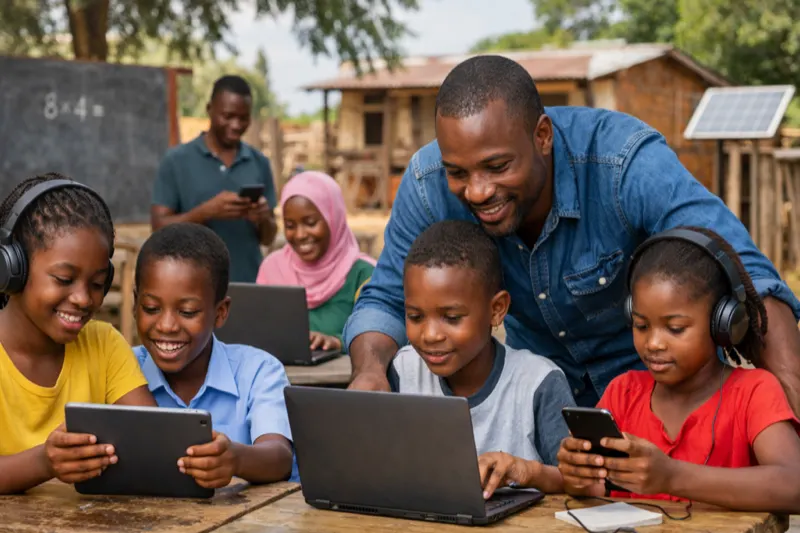
ABUJA — UNESCO has welcomed an initiative by the Nigerian Communications Commission to provide zero-rated access to selected educational platforms and digital content, describing the programme as a potentially important step toward reducing the country's digital literacy gap. The endorsement came during a public consultation on the proposed framework in Abuja. The initiative seeks to allow students to access approved educational platforms without paying normal data charges. Supporters believe the approach could make online learning more affordable, particularly for students whose families struggle with the cost of internet data. Digital education has become an increasingly important part of Nigeria's education system. Universities, secondary schools and training institutions use online platforms to distribute learning materials, conduct research and provide supplementary instruction. Yet unequal access to the internet means that many students cannot take full advantage of these opportunities. The cost of data is one barrier, while poor network coverage and inadequate electricity supply create additional challenges. The zero-rated access programme is intended to address at least part of the affordability problem. By removing data charges for selected educational resources, students could spend more time accessing lessons, digital libraries, research materials and other academic content. UNESCO's support reflects the importance of digital inclusion to educational development. Digital tools can help students access information beyond the physical resources available in their schools. They can also provide opportunities for self-directed learning and skills development. However, digital education works best when students have appropriate devices and teachers are able to guide them. Smartphones can provide basic access to online resources, but computers and larger screens may be more suitable for extended study and specialised applications. The programme therefore needs to be supported by broader investments in digital infrastructure and literacy. The consultation involved representatives of government agencies, education stakeholders and technology organisations. Such consultations are important because the success of zero-rating depends on technical and regulatory arrangements. Telecommunications operators need to identify eligible traffic while ensuring that the system cannot easily be abused for unrelated purposes. Educational platforms also need to provide reliable and relevant content. The initiative is part of Nigeria's broader efforts to use technology to improve education. The country has a large youth population and an expanding digital economy, creating strong demand for digital skills. Students who gain access to quality online resources can improve their knowledge in science, technology, mathematics, languages and other subjects. Digital education can also support vocational and entrepreneurial training. For students in remote communities, online content can supplement the limited educational resources available locally. But connectivity remains uneven. Rural and underserved areas often have weaker telecommunications infrastructure, meaning that zero-rated services may have limited impact unless network coverage improves. Government and telecommunications companies will therefore need to continue investing in infrastructure. Teachers are another important part of the digital education equation. Professional development can help teachers use online resources effectively and integrate technology into classroom instruction. Without appropriate training, digital platforms may remain underused even when students can access them for free. The experience of the COVID-19 pandemic demonstrated both the possibilities and limitations of digital education. School closures forced institutions to adopt remote-learning methods, but millions of students were unable to participate because they lacked internet access, devices or electricity. Reducing data costs could help address one of those barriers during future disruptions. The initiative also raises questions about the quality of educational content. Free access is valuable only when students can reach reliable and age-appropriate resources. Education authorities may therefore need to establish standards for platforms that qualify for zero-rated access. Monitoring will also be important to determine whether students are actually using the services and whether their learning outcomes improve. UNESCO's support gives the initiative international visibility, but implementation will ultimately determine its effectiveness. Nigeria will need cooperation among telecommunications companies, education authorities, technology providers, schools and development partners. The programme should also be accompanied by efforts to improve electricity, device availability and teacher training. If these challenges are addressed, zero-rated educational content could become a useful tool for expanding access to learning resources. For students from low-income households, removing data costs could make a meaningful difference. The initiative therefore represents an important step in Nigeria's effort to close the digital divide and ensure that technology contributes to better educational opportunities rather than creating another source of inequality.
UNESCO Backs Nigeria's Zero-Rated Educational Content Initiative
0
Views