


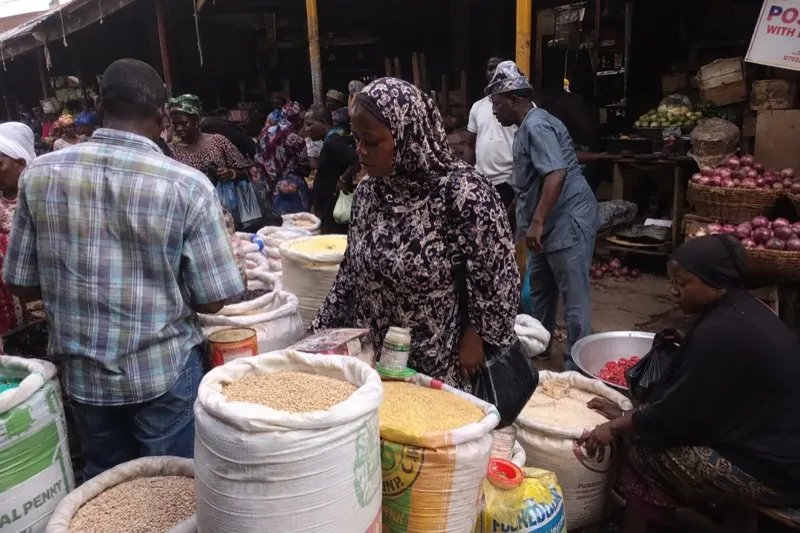
ABUJA — Vice President Kashim Shettima has said micro, small and medium enterprises account for about 90 percent of businesses in Nigeria and provide roughly 60 million jobs, highlighting their importance to the country's economic development. Shettima made the remarks during the 8th National MSME Awards in Abuja, where he said the Federal Government was working to build a sustainable, enterprise-led economy. The vice president said government efforts were focused on creating an ecosystem that supports innovation, improves infrastructure and removes barriers facing small businesses. MSMEs are central to economic activity in Nigeria because they operate across almost every sector. Small businesses are involved in agriculture, manufacturing, retail, transportation, hospitality, technology and professional services. Their widespread presence makes them an important source of employment and income, particularly outside large corporate organisations. For many Nigerians, small businesses provide the first opportunity to enter the labour market or become self-employed. However, entrepreneurs continue to face significant challenges. Access to finance remains a major issue, particularly for businesses without substantial collateral or long operating histories. High operating costs, unreliable electricity, transportation expenses and changing market conditions can also limit the ability of small businesses to expand. Government support programmes can help address some of these constraints, but their effectiveness depends on transparency and accessibility. Business owners need to know how to apply for support and should not be excluded by complicated procedures. Infrastructure is another important part of the MSME environment. Reliable electricity can reduce production costs for businesses that would otherwise depend on generators. Better roads and transport systems can make it easier for enterprises to move goods between markets. Digital infrastructure can also allow small businesses to reach customers beyond their immediate communities. The growth of digital commerce has created new opportunities for Nigerian entrepreneurs. Businesses can advertise, receive payments and communicate with customers through online platforms. However, digital expansion requires affordable internet access and basic digital skills. Training can therefore complement financial and infrastructure support. The government's enterprise-focused approach also reflects the importance of creating opportunities outside public-sector employment. Nigeria's growing population means the formal economy must generate large numbers of new jobs. Government alone cannot employ everyone entering the workforce. A strong private sector, including MSMEs, is necessary to absorb new workers and stimulate economic activity. Business awards can provide recognition for successful entrepreneurs, but long-term growth requires consistent policies. Small businesses need predictable taxation, clear regulations and access to markets. They also need protection from unfair practices and unnecessary administrative obstacles. Entrepreneurs who succeed can create additional jobs and contribute to their communities. The government therefore has an interest in ensuring that businesses can survive beyond their early years. Shettima's remarks underline the scale of the MSME sector and its importance to Nigeria's employment challenge. If policies aimed at supporting small enterprises are implemented effectively, they can contribute to broader economic inclusion. The objective should not simply be to increase the number of businesses registered, but to help viable enterprises become more productive, create jobs and remain sustainable. For millions of Nigerians already working in small businesses, improvements in infrastructure, finance and regulation could have a direct effect on their livelihoods.
MSMEs Drive Majority of Nigerian Businesses and Millions of Jobs, Shettima Says
0
Views